
Product
We delivers innovative gas solutions and technologies, driving your performance and helping you reduce your environmental impact.
PRODUCT
Oxygen (O₂) plays an essential role in many industries due to its strong oxidizing properties and ability to enhance combustion processes. From agriculture and healthcare to metallurgy and electronics manufacturing, oxygen supports numerous industrial operations and technological applications.
Industrial Uses of Oxygen by Sector
| Sector | Oxygen Applications |
|---|---|
| Agriculture | Modified Atmosphere (MA/CA) food packaging, controlled atmosphere storage, and transportation using MA/CA technology to extend shelf life of fruits and vegetables |
| Medical | Breathing support in hospitals and emergency care, oxygen therapy, and use in treatments that help reduce anxiety and respiratory distress |
| Chemical & Petrochemical | Plastic finishing processes and catalytic regeneration used in refining and chemical production |
| Metallurgy | Furnace lancing, continuous casting, oxy-fuel burners, flame enrichment, flame processing, welding, heat treating, metallizing, and oxy-fuel cutting in metal fabrication |
| Electronic | Heating, precision welding, and molding processes used in electronics and component manufacturing |
Importance of Oxygen in Industrial Processes
Oxygen improves combustion efficiency, reaction speed, and product quality in many industrial systems. In metallurgy, it allows higher furnace temperatures and cleaner metal production. In agriculture, controlled atmosphere technology helps maintain the freshness of food products during storage and transport.
In healthcare, oxygen remains one of the most important life-supporting medical gases, while in manufacturing sectors it enables precision heating, cutting, and welding processes essential for modern production.
Nitrogen (N₂) is one of the most versatile and widely used industrial gases in the world. Often referred to as a true “all-rounder” among gases, nitrogen is valued for its low chemical reactivity and its extremely low temperature in liquefied form. These two characteristics allow nitrogen to support a wide range of applications across industries including metallurgy, agriculture, medicine, electronics, chemical processing, and glass manufacturing.
Nitrogen makes up about 78% of Earth’s atmosphere, making it the most abundant gas in the air. Despite its abundance, its controlled use in industry provides significant advantages such as preventing oxidation, improving safety, enabling cryogenic cooling, and protecting sensitive materials.
Understanding how nitrogen works and how different industries apply it helps explain why it is considered one of the most essential industrial gases in modern manufacturing and technology.
| Sector | Nitrogen Applications |
|---|---|
| Agriculture | Modified or controlled atmosphere packaging (MA/CA), storage and transportation of agricultural products, sparging, freezing, refrigeration, case hardening, pest control such as rat eradication, and cryogenic grinding |
| Metallurgy | Continuous casting, blanketing, inerting, aluminum degassing, copper base metal processing, metallizing, welding, shrink fitting, scrap metal treatment, scrap cable recovery, cryogenic forming, and quenching |
| Electronic | Purging and shielding during electronic component manufacturing to prevent oxidation and contamination |
| Medical | Cryosurgery procedures and cryobiology research involving ultra-low temperature preservation |
| Chemical | Drying, blanketing, machining support, dephasing, freeze grinding, debonding, fiber tile reforming, plastic container disposal, reforming plastic tubes, used tire disposal foaming, sparging, purging, and injection processes |
| Glass & Lamp Industry | Blanketing, halogen lamp production, and manufacturing of bulbs and tubes |
Nitrogen (N₂) is one of the most versatile and widely used industrial gases in the world. Its inert chemical nature and cryogenic properties make it suitable for applications ranging from food preservation and medical cryotherapy to metal processing and chemical manufacturing.
From metallurgy and electronics to agriculture, medicine, and glass production, nitrogen plays a critical role in improving safety, efficiency, and product quality across countless industries.
As technology and manufacturing processes continue to evolve, the demand for nitrogen will remain strong, reinforcing its reputation as a true “all-rounder” gas in modern industry.content
Argon (Ar) is one of the most widely used noble gases in modern industry. Known for its inert chemical properties, argon does not easily react with other elements, making it extremely valuable for processes that require a stable and non-reactive atmosphere.
Argon is commonly used in electric light bulbs, as a shielding gas for welding and cutting, and as a protective atmosphere in advanced manufacturing processes such as the production of titanium and semiconductor crystals. Because of its unique properties, argon plays an important role in industries including metallurgy, electronics, medical technology, glass manufacturing, and chemical processing.
Industrial gas suppliers such as AGI provide argon in both gaseous and liquid forms, allowing it to be used in a wide variety of industrial and scientific applications.
| Sector | Argon Applications |
|---|---|
| Medical | Laser technology and cryobiology research involving low-temperature biological preservation |
| Glass & Lamp Industry | Blanketing, halogen lamp manufacturing, and production of bulbs and tubes |
| Metallurgy | Continuous casting, blanketing, inerting, metallizing, welding foundry processes, cryofitting, and heat treating |
| Electronic | Tube and lamp filling in lighting systems and electronic components |
| Chemical | Blanketing, sparging, purging, and prilling processes in chemical production |
| Others | Scientific research, pipeline purging, oxygen pressure testing, and use in process gas chromatographs |
Argon (Ar) is an essential industrial gas known for its inert properties, stability, and versatility. From welding and metal processing to semiconductor manufacturing and medical technology, argon supports a wide range of industrial and scientific applications.
Its ability to create oxygen-free environments, protect sensitive materials, and stabilize industrial processes makes argon indispensable in modern manufacturing.
Supplied in both gas and liquid forms, argon continues to play a vital role in industries such as metallurgy, electronics, healthcare, chemical production, and lighting technology.
As industries continue to advance, the demand for argon will remain strong, reinforcing its position as a critical gas for modern technology and industrial innovation.

Carbon dioxide (CO₂) is one of the most widely used industrial gases across multiple sectors. Although it naturally occurs in the atmosphere as part of the carbon cycle, carbon dioxide is also captured, purified, and supplied as a commercial product for numerous industrial, medical, and food-related applications.
Carbon dioxide is a colorless, odorless gas that can exist in gaseous, liquid, or solid form (dry ice) depending on temperature and pressure. Because of its unique physical and chemical properties, CO₂ plays a critical role in industries such as food and beverage, chemical processing, metallurgy, agriculture, and healthcare.
Industrial gas suppliers produce high-purity carbon dioxide and distribute it in gas cylinders, liquid storage tanks, or dry ice form, making it suitable for a wide range of commercial and industrial uses.Content
| Sector | Carbon Dioxide Applications |
|---|---|
| Food & Beverage | Carbonation of soft drinks, beer production, modified atmosphere packaging (MAP), food freezing, and dry ice cooling |
| Medical | Insufflation gas for minimally invasive surgery, respiratory stimulation in medical treatments |
| Metallurgy | Shielding gas in welding, casting processes, mold cooling |
| Chemical | pH control, chemical synthesis, supercritical CO₂ extraction, and inerting processes |
| Agriculture | Greenhouse enrichment to stimulate plant growth and improve crop yields |
| Fire Protection | CO₂ fire extinguishers and industrial fire suppression systems |
| Oil & Gas | Enhanced oil recovery (EOR), well stimulation, and pipeline pressure testing |
| Water Treatment | Neutralization of alkaline water and pH adjustment in municipal water treatment plants |
Carbon dioxide (CO₂) is an important industrial gas used in a wide range of sectors including food and beverage, healthcare, metallurgy, agriculture, chemical processing, and fire protection.
Its unique properties—such as non-flammability, phase flexibility, and chemical stability—make it an essential resource for modern industry.
From carbonating beverages and preserving food to supporting medical procedures and enhancing oil recovery, carbon dioxide continues to play a vital role in industrial innovation and everyday life.
Hydrogen (H₂) is one of the most versatile and cleanest industrial gases in the world. With its high energy content and light molecular weight, hydrogen is widely used in chemical production, energy applications, metallurgy, electronics, and emerging clean energy technologies.
Hydrogen is a colorless, odorless, and highly flammable gas that can be supplied in gaseous or liquid form. Industrial hydrogen is typically produced through steam methane reforming, electrolysis of water, or as a by-product of chemical processes. Its applications span across multiple sectors, from industrial manufacturing to fuel cell technology.
Hydrogen is considered a key enabler of the clean energy transition, making it essential for both current industrial processes and future green technologies.
| Sector | Hydrogen Applications |
|---|---|
| Chemical | Ammonia production (Haber-Bosch process), methanol synthesis, hydrogenation of fats and oils, hydrocracking, desulfurization, fuel refining |
| Metallurgy | Reduction of iron ore to produce steel, annealing atmospheres, metal heat treatment, powder metallurgy, and metal cleaning |
| Energy & Fuel | Fuel cells for transportation, stationary power generation, hydrogen storage for renewable energy, clean energy fuel source |
| Electronics & Semiconductor | Reducing gas in semiconductor manufacturing, atmosphere for crystal growth, electronics fabrication |
| Glass & Lamp | Fuel gas for float glass production, blanketing in specialized lamps |
| Food & Beverage | Hydrogenation of oils, fat processing, food preservation through inert atmospheres |
| Research & Laboratory | Gas chromatography carrier, laboratory chemical reactions, hydrogen isotopes for scientific studies |
Hydrogen (H₂) is a critical industrial gas with applications ranging from chemical synthesis and steel production to fuel cells and high-tech electronics. Its clean combustion, high energy content, and reducing properties make it essential for modern industry and a key enabler of the low-carbon future.
Supplied in gas or liquid form, hydrogen continues to support sustainable industrial growth, innovative technologies, and the global energy transition.
Helium (He) is a noble gas with unique properties that make it invaluable across a wide range of industries. Known for being colorless, odorless, inert, and extremely low in density, helium is used in applications ranging from cryogenics and electronics to healthcare and aerospace.
Unlike most industrial gases, helium is non-reactive, non-flammable, and extremely light, which allows it to serve specialized roles that other gases cannot fulfill. Industrial suppliers provide helium in gaseous and liquid forms, enabling diverse applications from high-tech manufacturing to scientific research.
| Sector | Helium Applications |
|---|---|
| Medical | MRI cooling, breathing gas mixtures for respiratory therapy, cryobiology |
| Electronics & Semiconductor | Protective atmospheres in semiconductor manufacturing, leak detection, inert gas shielding |
| Metallurgy | Shielding gas for welding and high-temperature processes, metal heat treatment |
| Research & Scientific | Cryogenic research, particle accelerators, superconducting magnets, low-temperature physics |
| Aerospace & Defense | Pressurizing and purging rocket fuel tanks, lifting gas in balloons and airships |
| Glass & Lamp | Protective atmospheres during glass and lamp production |
| Others | Leak detection, calibration gas, inert environments in chemical processing |
Helium (He) is a critical industrial and scientific gas with applications across medical, electronics, metallurgy, research, aerospace, and specialty industries. Its inert nature, low density, and cryogenic properties make it irreplaceable in modern technology and research.
Supplied in gas, liquid, or specialty mixtures, helium continues to support cutting-edge science, advanced manufacturing, healthcare innovations, and aerospace applications, making it one of the most versatile gases in industry today.
Acetylene (C₂H₂) is a highly flammable hydrocarbon gas widely used in metal fabrication, chemical synthesis, and industrial heating processes. Known for its high flame temperature and energy density, acetylene is the preferred choice for applications such as oxy-acetylene welding, cutting, and thermal spraying.
Supplied in compressed gas cylinders or dissolved in acetone, acetylene is carefully handled due to its instability under pressure, but its versatility and efficiency make it indispensable in manufacturing and construction industries.
| Sector | Acetylene Applications |
|---|---|
| Metallurgy & Metal Fabrication | Oxy-acetylene welding, cutting, flame heating, thermal spraying, brazing, soldering |
| Chemical Industry | Synthesis of acetaldehyde, acetic acid, PVC, synthetic rubber, and other organic chemicals |
| Glass & Lamp Industry | Glass cutting, flame polishing, high-temperature glass processing |
| Automotive & Construction | Fabrication of metal structures, pipe cutting, repair work, heating metal parts |
| Research & Laboratory | Organic synthesis, chemical reaction studies, gas flame experiments |
| Energy & Fuel | Temporary heating and flame-based applications where portable fuel gases are needed |
Safety Considerations
Due to acetylene’s high flammability and instability under pressure, safety precautions are critical:
- Store cylinders upright and in well-ventilated areas.
- Dissolve acetylene in acetone to reduce explosion risk.
- Avoid high-pressure storage without proper containment.
- Use regulators, flashback arrestors, and proper handling equipment.
Proper handling ensures safe use in industrial and laboratory environments.
Acetylene (C₂H₂) is a critical industrial gas with applications across metal fabrication, chemical production, glass processing, and research laboratories. Its high flame temperature, energy density, and chemical reactivity make it the preferred choice for welding, cutting, heating, and chemical synthesis.
Supplied in dissolved or compressed forms, acetylene continues to support precision manufacturing, chemical innovation, and portable industrial operations worldwide.
Nitrous oxide (N₂O), commonly known as laughing gas, is a colorless, non-flammable gas with a slightly sweet odor and taste. Beyond its well-known use in medicine as an anesthetic and analgesic, nitrous oxide is widely used in industrial applications due to its oxidizing properties, inertness, and ability to act as a propellant.
Industrial suppliers provide nitrous oxide in compressed gas cylinders for use across medical, automotive, chemical, and food industries. Its combination of safety, stability, and functionality makes it an important gas in multiple sectors.
| Sector | Nitrous Oxide Applications |
|---|---|
| Medical & Healthcare | Analgesia and anesthesia, dental sedation, surgical procedures, obstetric pain management |
| Food & Beverage | Propellant in whipped cream dispensers, aerosol foaming agents, carbonated beverages |
| Automotive & Motorsports | Engine performance enhancement (nitrous injection), racing applications for higher combustion efficiency |
| Chemical Industry | Oxidizing agent in chemical reactions, polymerization processes, laboratory reagent |
| Research & Laboratory | Calibration gas, experimental reactions, analytical chemistry |
| Others | Greenhouse enrichment in agriculture (CO₂/N₂O blends for plant growth studies), specialty gas applications |
Nitrous oxide (N₂O) is a versatile industrial and medical gas with applications across healthcare, food, automotive, chemical, and research sectors. Its anesthetic, propellant, and oxidizing properties make it indispensable for modern industry and healthcare.
Supplied in compressed gas cylinders, blended mixtures, or food-grade forms, nitrous oxide continues to support pain management, culinary innovation, engine performance, and chemical manufacturing, making it a critical gas in multiple sectors.
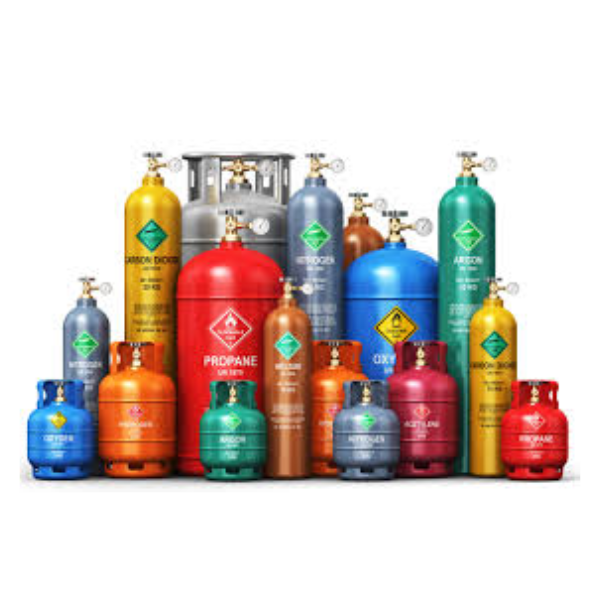
Specialty gases are high-purity or ultra-high-purity gases used in precision applications across industries, including electronics, healthcare, research, and chemical production. Unlike common industrial gases like oxygen or nitrogen, specialty gases are valued for their purity, precise composition, and controlled supply. They often contain trace mixtures or specific concentrations tailored for sensitive applications.
Specialty gases are essential for industries that require reliable performance, reproducibility, and safety in processes that cannot tolerate impurities. They are typically supplied in cylinders, gas manifolds, or gas cabinets, sometimes in mixtures or blended forms.
Key Properties of Specialty Gases
Specialty gases are defined by their high purity and controlled composition. Key characteristics include:
-
High Purity – Often 99.999% (five nines) or higher for critical applications.
-
Precise Mixtures – Custom blends of gases for analytical, calibration, or process control purposes.
-
Inert or Reactive – Can be inert (like argon) or reactive (like hydrogen or oxygen) depending on application.
-
Trace Components – Controlled addition of ppm (parts per million) or ppb (parts per billion) levels of impurities for calibration or chemical reactions.
-
Special Packaging – Delivered in cylinders, tanks, or gas cabinets designed to maintain purity and safety.
Categories of Specialty Gases
Specialty gases can be broadly categorized into the following types:
-
High-Purity Gases – Ultra-pure single-component gases like helium, nitrogen, argon, oxygen, hydrogen, and carbon dioxide.
-
Calibration Gases – Precisely formulated mixtures used to calibrate analytical instruments, such as gas chromatographs and mass spectrometers.
-
Process Gases – Used in chemical reactions, semiconductor manufacturing, and electronics production, often supplied as blends.
-
Rare or Noble Gases – High-purity helium, neon, krypton, xenon, or mixtures for specialized applications.
-
Medical and Pharmaceutical Gases – Nitrous oxide, oxygen, helium-oxygen blends, or medical air for hospitals, laboratories, and research.
-
Research and Analytical Gases – Trace gases, isotopic gases, or high-purity mixtures for laboratory experiments and scientific studies.
Industrial Applications of Specialty Gases
Specialty gases are widely used across industries where precision and purity are critical. The table below highlights the key sectors and applications:
| Sector | Speciality Gases Applications |
|---|---|
| Electronics & Semiconductor | Protective atmospheres, wafer fabrication, crystal growth, etching, chemical vapor deposition (CVD), plasma generation |
| Chemical & Petrochemical | Controlled reactions, inerting, blanketing, analytical calibration, laboratory research |
| Medical & Healthcare | Anesthesia, respiratory therapy, medical imaging (MRI), sterilization, laboratory reagents |
| Food & Beverage | Modified atmosphere packaging (MAP), carbonation, inert packaging, controlled freezing |
| Metallurgy & Welding | Shielding gases, heat treatment atmospheres, welding of sensitive alloys |
| Research & Laboratories | Gas chromatography calibration, spectroscopy, analytical chemistry, trace element analysis |
Specialty gases are essential for industries that demand precision, purity, and reliability. From electronics, chemical, and medical sectors to food, metallurgy, and research laboratories, these gases play a vital role in modern technology and production.
With ultra-high purity, custom blends, and traceable quality, specialty gases ensure accurate processes, high-quality products, and safe operations. Industrial suppliers provide specialty gases in gas cylinders, blended mixtures, and liquid forms, making them versatile tools across cutting-edge industries worldwide.